Quick Facts
- Credit Rating: Fitch upgraded CKI to A (Stable Outlook) in March 2026.
- War Chest: Projected HK$57 billion in cash by end of 2026.
- Dividend Yield: 6.09% forward yield with a 27-year growth streak.
- Leverage Limit: Fitch requires EBITDA net leverage to stay below 5.0x.
- Strategic Shift: Transitioning from regulated asset ownership to high-liquidity M&A capacity.
- Investor Verdict: Is CK Infrastructure stock a buy for value investors? The rating upgrade and massive liquidity buffer suggest a strong yes for defensive portfolios.
CK Infrastructure stock has received a major vote of confidence. Fitch Ratings has upgraded CKI to an A rating (Stable), citing its bulletproof regulated cash flows and improved support from parent CK Hutchison. With a massive HK$57 billion liquidity position projected by 2026, many wonder: Is this the ultimate defensive buy? The Fitch upgrade to A confirms CK Infrastructure stock as a robust defensive equity, backed by a massive HK$57 billion cash pile and clear HK Hutchison parent support, making it an attractive buy for investors seeking inflation hedging and a 6%+ dividend yield.
The Fitch Upgrade: Why an A Rating Matters
In the world of infrastructure investing, credit spreads are the silent drivers of shareholder value. When Fitch Ratings upgraded CK Infrastructure’s Long-Term Issuer Default Rating to A from A- with a stable outlook in March 2026, it signaled a fundamental shift in the company's risk profile. This one-notch upgrade is not merely a technicality; it reflects a tightening of the strategic and financial relationship between CKI and its parent, CK Hutchison.
For the long-term investor, the impact of Fitch A rating on CK Infrastructure borrowing costs is significant. Higher credit ratings typically lead to lower interest expense, which is critical for a company that relies on debt to finance large-scale utility projects. Fitch cited the group's "medium" support incentive, suggesting that CK Hutchison is highly likely to provide financial backing if needed. This safety net reduces refining risk during periods of market volatility.
Why this matters: Institutional Stability
The upgrade acts as a seal of approval for institutional funds that have strict mandates for investment grade assets. By removing the Rating Watch Positive and solidifying the stable outlook, Fitch has provided a clearer runway for the company to manage its liabilities. However, this upgrade comes with conditions. Fitch has clearly mapped out an infrastructure stock leverage evaluation framework, noting that CKI must maintain its EBITDA net leverage below the 5.0x threshold to keep this status.
Analyzing CK Hutchison support for CK Infrastructure stock reveals that the parent company's own credit strength serves as a floor for CKI. As CK Hutchison improves its balance sheet, CKI reaps the rewards through shared credit uplift. This symbiotic relationship ensures that CKI remains a defensive equity of choice, even as global interest rates remain elevated.
From Assets to Cash: Examining the HK$57 Billion War Chest
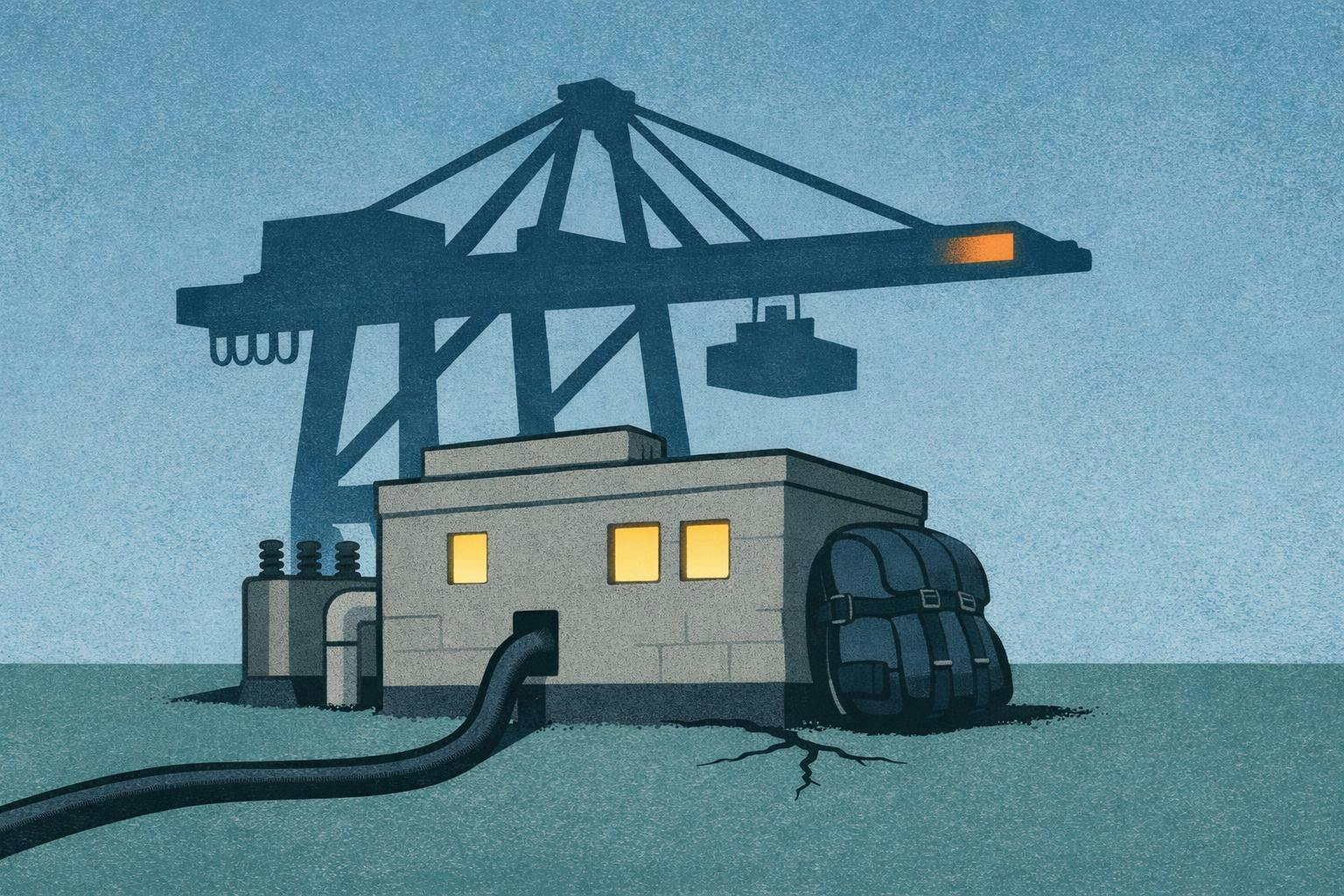
CK Infrastructure has recently pivoted from a pure "buy and hold" model to a more sophisticated "capital recycling" strategy. The blockbuster sales of stakes in UK Power Networks and Eversholt UK Rails have transformed the balance sheet. Instead of being weighed down by asset-heavy operations, the company is sitting on a mountain of liquidity.
By the end of 2026, the company is projected to have a HK$57 billion cash position. To put this in perspective, CKI’s gross debt is currently estimated at around HK$20.8 billion. This puts the company in a rare net-cash position, providing an incredible amount of financial flexibility in an industry usually defined by high indebtedness. This CK Infrastructure cash position after UK Power Networks sale allows the management team, led by the strategic vision associated with the Li Ka-shing family, to wait for the "perfect" acquisition rather than feeling pressured to buy.
Why this matters: Opportunistic M&A
With such a large war chest, CKI is uniquely positioned to acquire distressed or undervalued utility assets in investment-grade jurisdictions like the UK and Australia. While other competitors are struggling to service high-interest debt, CKI can move swiftly. When evaluating CK Infrastructure leverage ratio for long term growth, it becomes clear that the company has a massive buffer. It could theoretically double its debt load and still remain well within the safety zones required by credit agencies.
| Metric | Target/Limit | Rating Agency |
|---|---|---|
| EBITDA Net Leverage | < 5.0x | Fitch |
| FFO-to-Debt Ratio | > 23% | S&P Global |
| Projected Liquidity | HK$57 Billion | Internal/Forecast |
Income Fortress: 27 Years of Dividend Growth
For income-focused investors, the primary draw remains the legendary dividend consistency. CKI holds a prestigious record of 27 consecutive years of increasing its distributions. This is not just a streak; it is a testament to the resilient cash flows generated by regulated utilities. Whether the economy is in a recession or a boom, people still pay their water, electricity, and gas bills.
The currently attractive yield of over 6% is backed by a disciplined payout ratio of approximately 42%. This low payout ratio provides a significant cushion, ensuring CK Infrastructure dividend sustainability even if there are temporary fluctuations in earnings from subsidiary companies. Furthermore, the regulated nature of its assets provides an inherent economic moat and acts as an effective inflation hedging tool, as many utility contracts are indexed to inflation.
Why this matters: Compounding Wealth
The CK Infrastructure dividend sustainability after Fitch upgrade is further bolstered by the reduced cost of capital mentioned earlier. As interest expenses fall, more free cash flow is available for distribution to shareholders. While some investors were concerned that selling stakes in major assets like UK Power Networks would lead to earnings dilution, the interest earned on the massive cash pile—combined with the potential for higher-yielding new acquisitions—effectively mitigates this risk.
Investing in CK Infrastructure stock is essentially a play on regulated, inflation-protected income. For those building a retirement portfolio, this level of predictability is invaluable. The company’s focus on high-quality jurisdictions ensures that political risk is minimized, while the stable 'A' rating ensures that capital markets remain open and affordable.
Risk Factors & Investment Verdict
While the bull case for CK Infrastructure stock is compelling, a prudent investment strategy requires acknowledging the risks. One primary concern is the geographic concentration; approximately 52% of the company’s profit comes from the United Kingdom. While the UK is an investment-grade jurisdiction, changes in British utility regulations or tax laws could have a disproportionate impact on CKI’s bottom line.
There is also the matter of infrastructure stock leverage evaluation from multiple agencies. While Fitch is satisfied with an EBITDA net leverage below 5x, S&P Global keeps a close eye on the 23% FFO-to-debt ratio. Any aggressive acquisition that pushes these metrics beyond the limits could lead to a rating outlook revision, potentially increasing borrowing costs once again.
However, the final verdict remains positive. The combination of a 6%+ yield, a 27-year growth history, and a HK$57 billion cash buffer makes CKI one of the most stable plays in the current market. The Fitch upgrade serves as the ultimate validation of the company's financial health and the strength of its relationship with CK Hutchison.
For investors seeking a defensive equity that provides growth through capital recycling and stability through regulated income, CK Infrastructure stock is a high-quality "Buy." It is a rare example of a company that offers both a fortress-like balance sheet and the liquidity to capitalize on future market dislocations.
FAQ
Is CK Infrastructure a good stock for dividends?
Yes, CK Infrastructure is widely considered an elite dividend stock, particularly for those seeking longevity. It has a 27-year track record of consistently increasing its annual distributions. This growth is supported by a conservative payout ratio and stable cash flows from regulated utility assets, which provide a high degree of predictability for income investors.
What is the current dividend yield of CK Infrastructure?
As of current market valuations, the dividend yield for CK Infrastructure stock sits at approximately 6.09%. This yield is significantly higher than many other global utility peers and is viewed as sustainable given the company's robust liquidity position and its recent Fitch upgrade to a stable A rating.
How has CK Infrastructure stock performed over the last year?
Over the last year, CK Infrastructure stock has shown resilience compared to the broader market, particularly during periods of interest rate volatility. While the stock price has fluctuated based on macro-economic shifts, the recent credit rating upgrade by Fitch and the successful divestiture of UK-based assets have provided a floor for the valuation, attracting value-oriented investors.
What are the main risks of investing in CK Infrastructure?
The primary risks include geographic concentration, with a large portion of earnings originating in the United Kingdom. Additionally, maintaining specific financial ratios—such as the 5x EBITDA net leverage for Fitch or the 23% FFO-to-debt for S&P—is crucial. Any regulatory changes in key markets like Australia or the UK could also impact the profitability of its underlying utility assets.
Is CK Infrastructure considered a safe investment for a retirement portfolio?
For many investors, CK Infrastructure is considered a "safe" or defensive investment for a retirement portfolio. This is due to its investment-grade credit rating, its history of inflation-indexed income, and its massive cash reserves which allow it to navigate economic downturns. Its focus on essential services like water and power ensures that its core business remains relevant regardless of the economic cycle.