Quick Facts
- Sale Value: A $750 million enterprise value for the complete disposal of Colombian upstream units.
- Shareholder Payout: Projected capital return of roughly CAD $9.18 per share via special distribution.
- Approval Threshold: The deal requires a minimum of 66 2/3% of shareholder votes to proceed.
- Asset Focus: Post-divestment, the company retains a 35% stake in the ODL pipeline and 99.97% ownership of the Port of Puerto Bahia.
- Strategic Shift: Moving from a commodity-exposed exploration and production model to a stable, fee-based infrastructure and midstream services entity.
- Debt De-risking: Parex Resources will assume 310 million of Frontera’s 2028 Senior Unsecured Notes, significantly cleaning up the balance sheet.
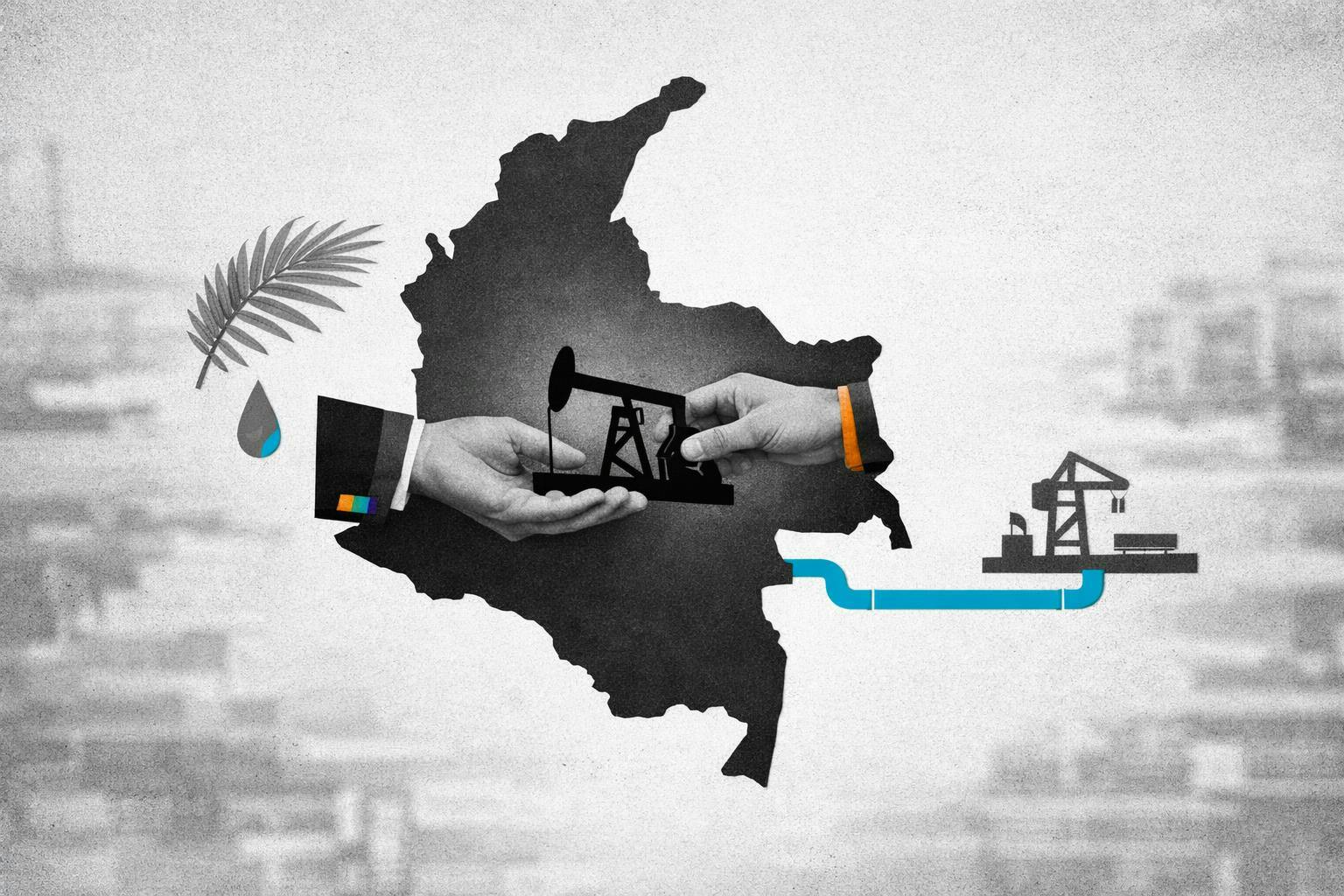
The Frontera Energy divestment represents a transformative pivot where the company exits its Colombian upstream oil and gas production to become a dedicated infrastructure entity focused on midstream energy services and logistics. By executing this $750 million sale to Parex Resources, Frontera aims to unlock immediate value for shareholders through a massive capital return plan while transitioning to a business model anchored by stable, fee-based revenue.
The $750 Million Sale to Parex: Deal Mechanics
The decision to exit the upstream sector in Colombia is not merely an asset monetization exercise; it is a fundamental restructuring of how the company generates value for its equity holders. Under the terms of the agreement, Parex Resources will acquire Frontera’s entire Colombian exploration and production portfolio. The transaction is structured as a sale of the company's Colombian upstream unit, which includes all production assets, exploration blocks, and associated field infrastructure.
From a balance sheet perspective, the enterprise value calculation reflects a sophisticated clean-up of the company's financial obligations. Parex Resources has agreed to assume a total of $390 million in liabilities, which includes the 310 million of Frontera’s 2028 Senior Unsecured Notes and an additional $80 million prepayment facility held with Chevron. This move effectively offloads a significant portion of Frontera's long-term debt, lowering its total debt to approximately $131 million.
For many long-term holders, the Frontera Energy shareholder vote for capital distribution process is the most critical hurdle. Because the transaction involves a sale of substantially all of the company’s operating assets in the upstream segment, it requires a high super-majority of 66 2/3% of the votes cast by shareholders. Investors should view this as a binary event: without this approval, the upstream exploration exit cannot proceed, and the anticipated capital return would likely be deferred or canceled. The management team is betting that the transparency of the enterprise value calculation and the debt reduction will be enough to secure this mandate.
The Capital Return Plan: What Shareholders Receive
The centerpiece of this transaction is the Frontera Energy capital return plan, which is designed to immediately solve the valuation gap that has plagued the stock for years. Management has committed to a distribution of approximately $470 million to its shareholders following the successful completion of the sale. When translated into local currency for Canadian investors, this represents a potential payout of roughly CAD $9.18 per share.
This special dividend distribution is significant because the distribution range (roughly CAD $7.18 to $9.18 per share) often exceeds the recent trading prices of the stock itself. This suggests that the market had been valuing the company's E&P assets at a discount, or perhaps even with a negative value, due to the political and operational risks associated with Colombian drilling. By converting these "risky" barrels of oil in the ground into liquid cash, the company is forcing a realization of value that the open market failed to recognize.
Investors should note the timing of these payments. The distribution is expected to occur shortly after the transaction closes, which is currently slated for the second half of 2026. This requires a degree of patience, as the company must first clear regulatory hurdles and the aforementioned shareholder vote. However, for those looking for a high-conviction value play, the potential yield from this capital return alone makes the stock a unique case study in energy sector de-risking.
The Infrastructure Pivot: Life After Upstream Oil
What remains after the divestment is what management calls the "New Frontera." By shedding the volatility of drilling and production, the company is reinventing itself as a pure-play infrastructure entity. The core of this new business model resides in two world-class assets that provide the kind of fee-based revenue model that institutional investors often prize for its predictability.
The first cornerstone is the ODL pipeline stake. Frontera retains a 35% interest in the Oleoducto de los Llanos Orientales (ODL) pipeline, which is the primary artery for transporting heavy crude from the Llanos Basin. This asset generates steady cash flow with a $4.70 average tariff per barrel, unaffected by whether oil is $40 or $100. The second cornerstone is the Port of Puerto Bahia, a strategic maritime terminal in Cartagena. As the owner of 99.97% of the port, Frontera is positioned to capitalize on growing demand for liquid storage, general cargo expansion, and specialized energy logistics.
Understanding Frontera Energy's new infrastructure business model requires a shift in mindset. Instead of looking at "replacement ratios" and "drilling success," investors must now focus on "port throughput" and "pipeline utilization." The value of Frontera Energy's Puerto Bahia and ODL assets lies in their high barriers to entry and their essential role in Colombia's energy supply chain.
| Feature | Old Frontera (Pre-Divestment) | New Frontera (Post-Divestment) |
|---|---|---|
| Primary Revenue | Volatile oil and gas sales | Stable, fee-based infrastructure tariffs |
| Risk Profile | High commodity price sensitivity | Operational and volume-based risk |
| Core Assets | 30+ exploration and production blocks | ODL Pipeline (35%) & Puerto Bahia (99%) |
| Debt Level | ~$441 million | ~$131 million |
| Growth Strategy | Drilling and reservoir expansion | LNG, LPG import, and port cargo expansion |
Frontera Energy's strategic exit from upstream production marks its transformation into a dedicated midstream and infrastructure player.
The Frontera Energy infrastructure pivot also introduces new growth catalysts that were previously overshadowed by the E&P business. The Puerto Bahia site has significant land available for development, with active plans for LNG regasification projects and LPG import facilities. These utilities-like services typically command much higher valuation multiples in the public markets compared to traditional upstream companies.
Risk Assessment: Re-rating Potential vs. Growth Limits
From a portfolio strategy perspective, the Frontera Energy stock risk assessment changes dramatically following this deal. The most significant benefit is commodity risk mitigation. By moving away from price-sensitive production, the company’s cash flow becomes more resilient to global oil price crashes. This "utility-like" profile often leads to a re-rating potential for Frontera Energy stock after divestment, as infrastructure companies usually trade at double-digit EBITDA multiples, whereas junior E&P firms often languish in the 3x to 5x range.
However, a thorough Frontera Energy infrastructure pivot risk assessment must also account for the loss of "upside." In a traditional oil company, a massive new discovery can send the stock price up 50% overnight. An infrastructure company rarely sees that kind of explosive growth. The new Frontera will be a slower, steadier machine. Investors must ask themselves if they are comfortable trading the high-octane potential of exploration for the bond-like stability of midstream energy services.
There is also the risk of concentration. Investing in Frontera Energy after Colombia E&P sale means you are heavily exposed to the specific logistics and regulatory environment of the Port of Cartagena and the ODL pipeline route. While the company has significantly reduced its debt, any major disruption at Puerto Bahia would have a more outsized impact on the "New Frontera" than it would have on the diversified version of the company.
Investor Action Plan
For those considering a position or currently holding shares, the following timeline and milestones are crucial:
- Shareholder Meeting: Expected in the coming months. This is the make-or-break moment for the 66 2/3% approval threshold.
- Regulatory Clearances: Closing the sale with Parex Resources requires standard government approvals in Colombia, expected by late 2025 or early 2026.
- Transaction Closing: Targeted for the second half of 2026.
- Special Distribution: Cash payout to shareholders typically occurs shortly after the legal close of the transaction.
My tactical advice for long-term investors is to treat the upcoming distribution as a partial return of principal. At current valuations, the market may still be pricing in a high degree of skepticism regarding the deal's closure. If you believe the shareholder vote will pass and regulatory hurdles are manageable, the stock currently offers a rare opportunity to buy into high-quality infrastructure assets with a significant cash-back component acting as a safety margin.
FAQ
Why is Frontera Energy divesting its assets?
The company is divesting its Colombian upstream business to transition into a pure-play infrastructure and midstream entity. This move is designed to unlock shareholder value that has been trapped in a discounted E&P valuation, reduce the company's total debt by approximately $311 million, and create a more stable, fee-based revenue stream that is less sensitive to volatile global oil prices.
How will the divestment impact Frontera Energy's stock price?
The divestment is expected to trigger a significant capital return of between $370 million and $470 million to shareholders, potentially worth up to CAD $9.18 per share. Beyond the immediate cash payout, the stock may experience a valuation re-rating as the market begins to value the remaining midstream assets (like the ODL pipeline and Puerto Bahia) at the higher multiples typically reserved for infrastructure companies.
How does the divestment strategy align with Frontera Energy's financial goals?
This strategy aligns with the goal of "de-risking" the corporate balance sheet. By having Parex Resources assume a significant portion of its 2028 notes, Frontera dramatically lowers its interest expenses and improves its debt-to-equity ratio. The shift toward fee-based revenue ensures more predictable cash flows, facilitating consistent returns to shareholders and future investment in port and pipeline expansions.
What is the expected timeline for the Frontera Energy divestment?
The transaction is expected to close in the second half of 2026. This timeline accounts for the time needed to hold a special meeting for the shareholder vote, as well as the window required for Colombian regulatory and government approvals. The capital distribution to shareholders is planned to follow immediately after the transaction successfully closes.
Are there major risks associated with the Frontera Energy divestment?
The primary risk is the execution risk of the transaction itself, which requires a high shareholder approval threshold of 66 2/3%. Additionally, while the infrastructure model provides stability, it limits the company's exposure to the rapid growth potential seen in successful oil exploration. Investors also face concentrated geographical risk, as the company’s remaining value will be heavily tied to the performance of its specific Colombian port and pipeline assets.