Quick Facts
- Market Stance: Distinctly hawkish with a focus on 'Stealth Rate Hicks' via a stronger dollar.
- Primary Goal: Aggressive balance sheet normalization from the current $6.7 trillion level.
- Market Impact: Historical data suggests a possible 7-8% drawdown in major indices within 90 days of a hike cycle.
- Top Sector Pick: Financials and banking stocks benefiting from yield curve dynamics.
- Sectors to Avoid: High-multiple growth tech and multinational materials.
- Strategy Focus: Defensive assets for a stronger dollar environment and high dividend yield stocks.
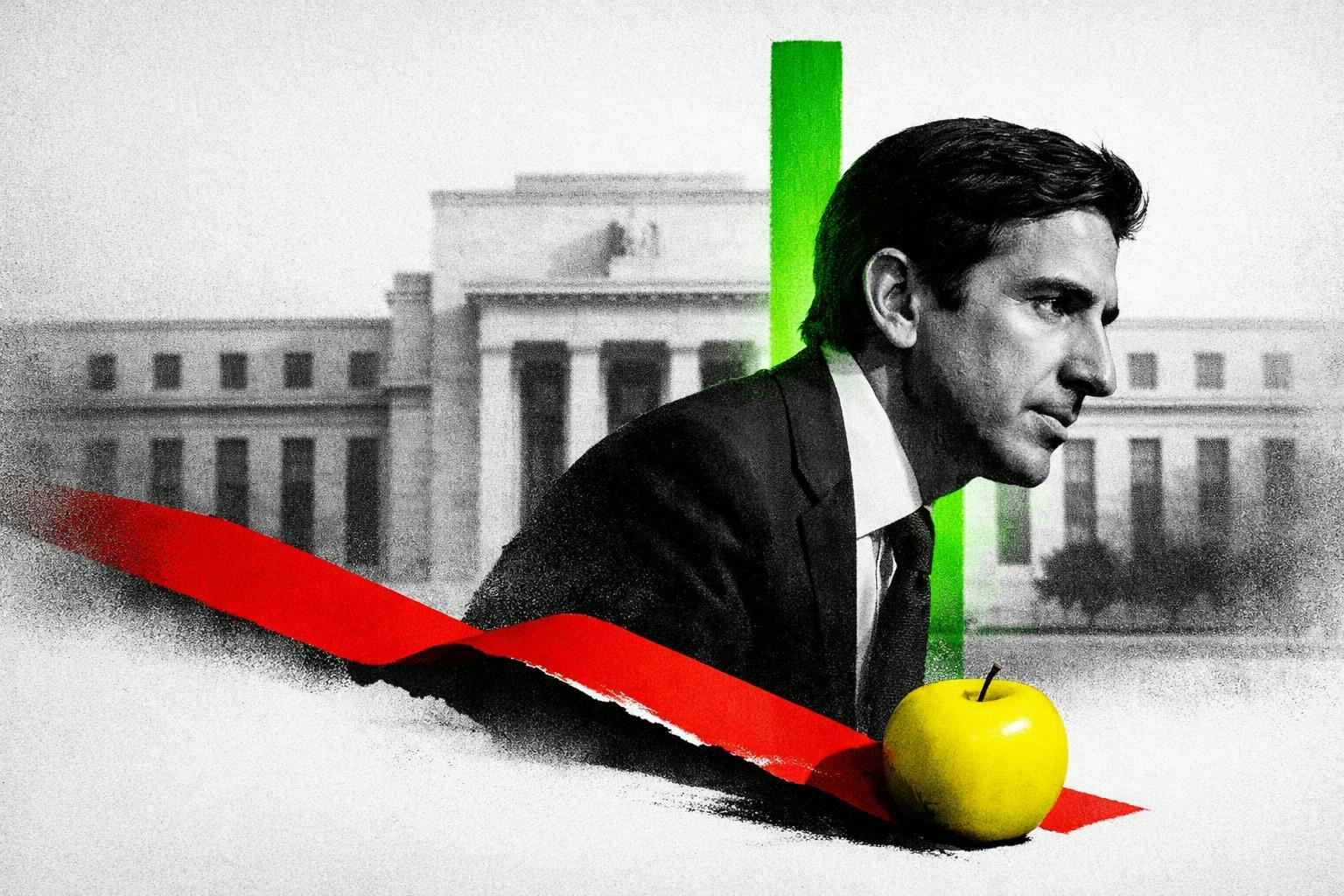
Kevin Warsh Fed chair nomination signals a hawkish shift toward balance sheet normalization and tighter monetary policy. Investors must prepare for liquidity drains and valuation compression in the S&P 500. Kevin Warsh is widely viewed as a monetary hawk, implying a shift toward tighter policy and balance sheet reduction. This quantitative tightening drains liquidity from the financial system, which typically creates headwinds for major indices like the S&P 500 and Nasdaq. Investors should prepare for potential valuation compression as the market adjusts to higher neutral interest rates and reduced central bank support.
The Warsh Philosophy: Why Balance Sheet Normalization Matters
In the world of central banking, the appointment of a leader is rarely just a personnel change; it is a regime shift. When Kevin Warsh took office as the Chair of the Federal Reserve in May 2026, he inherited a central bank balance sheet valued at approximately $6.7 trillion, a figure he has publicly advocated for reducing toward pre-2008 levels. For the individual investor, this signifies a departure from the "Fed Put" that has historically cushioned market falls.
Warsh operates under the firm belief that the massive expansion of the Fed balance sheet has disproportionately benefited asset owners while distorting the price of risk. His approach identifies quantitative tightening as a primary tool rather than a secondary background process. This fundamental monetary policy shift requires a rethinking of the equity risk premium. When the Fed actively pulls liquidity out of the market to normalize its holdings, the cost of capital rises, which naturally exerts downward pressure on stock price-to-earnings multiples.
The urgency of this normalization is underscored by the inflationary climate. The U.S. Consumer Price Index rose by 3.8% year-over-year in April 2026, marking a three-year high and creating a complex inflationary backdrop for the start of the Warsh-led Fed tenure. With Super Core PCE also showing resilience at 4.2%, the primary goal of this hawkish monetary policy investment strategy is to reclaim the central bank's inflation-fighting credibility, even if it comes at the expense of short-term market volatility.
The Stealth Rate Hike: Stronger Dollar and Liquidity Drains
While the federal funds rate usually captures the headlines, Kevin Warsh often emphasizes the restrictive power of a stronger currency. In what analysts call a stealth rate hike, a hawkish Federal Reserve often leads to an appreciation of the US Dollar Index. Under a Kevin Warsh Fed, the anticipation of higher-for-longer interest rates draws global capital into the dollar, effectively tightening financial conditions without the Fed having to move the nominal interest rate at every meeting.
This environment presents a specific challenge for multinational stocks. A stronger dollar makes American products more expensive abroad and reduces the value of international earnings when converted back into USD. As a result, sectors with high international revenue exposure, such as materials and large-cap tech, may see profit margins squeezed. Following the Kevin Warsh Fed chair nomination in early 2026, markets experienced a rapid repricing where risk assets moved lower and precious metals like gold and silver faced a significant sell-off as traders anticipated this shift toward higher long-term interest rates.
Macro Data Alert: Monitor the spread between the 2-year and 10-year Treasury notes. Under a Warsh regime, yield curve dynamics often reflect a higher neutral rate, which can trigger periodic bouts of interest rate volatility and repricing of long-duration growth assets.
Stock Sector Outlook under Kevin Warsh Fed: Winners and Losers
Under a hawkish Federal Reserve chair, sector performance usually diverges. The transition from an era of easy money to one of balance sheet normalization creates a clear distinction between companies that rely on cheap debt and those that generate significant cash flow. To navigate this, investors must adjust their stock sector outlook under kevin warsh fed to favor quality and value over speculative growth.
The table below outlines the predicted trajectory for major sectors as the market adjusts to the new regime:
| Sector | Outlook | Primary Driver |
|---|---|---|
| Financials & Banking | Bullish | Widening net interest margins and a steeper yield curve. |
| Healthcare | Defensive | Inelastic demand and strong balance sheets provide stability. |
| Consumer Staples | Defensive | Ability to pass on costs; less sensitive to interest rate volatility. |
| Information Technology | Bearish | High-multiple valuations are sensitive to rising discount rates. |
| Real Estate (REITs) | Bearish | High cost of capital pressures acquisition growth and dividends. |
| Materials | Bearish | Stronger dollar creates headwinds for global commodity exporters. |
The impact of kevin warsh fed chair on financial and banking stocks is perhaps the most documented positive correlation. As the Fed moves away from suppressing the long end of the curve, banks can profit more effectively from the gap between the interest they pay on deposits and the interest they earn on loans. Conversely, investors should identify stock market sectors to avoid with kevin warsh as fed chair, specifically those with excessive debt-to-equity ratios.
For those looking for stability, the best defensive stocks for a hawkish federal reserve environment are typically found in healthcare and consumer staples. These firms act as a buffer because their earnings are less tied to the credit cycle. Meanwhile, the capital allocation strategy for many tech firms will likely shift from aggressive expansion toward share buybacks and cost-cutting to maintain investor interest during this period of valuation compression.
Portfolio Survival: Rebalancing for a 2026 QT Regime
Survival in a quantitative tightening environment requires a proactive approach to risk management. To mitigate risks under a Warsh-led Fed, investors can consider rebalancing portfolios toward defensive assets and inflation-sensitive stocks. This is not just about picking individual stocks; it is about how you protect your portfolio from fed balance sheet reduction across all account types, including retirement funds.
Strategic moves for rebalancing stock portfolios for a quantitative tightening regime 2026 include:
- Shortening Bond Duration: Long-dated bonds are highly sensitive to interest rate moves. By moving toward shorter-term fixed income, you reduce the risk of capital loss if rates stay higher for longer.
- Focusing on Cash Flow: In a liquidity drain, "cash is king." Prioritize companies with a high equity risk premium that can self-fund their operations without relying on capital markets.
- Generating Income: Seek out high dividend stocks to hold if interest rates stay higher for longer. These provide a tangible return regardless of whether the broader index is moving sideways or lower.
- 401(k) Adjustments: Protecting 401k allocations may involve reducing exposure to high-multiple growth equities in favor of value stocks that can withstand a higher-for-longer interest rate environment.
As we monitor the markets toward the end of 2026, the zero rate cut scenario becomes a distinct possibility if inflation remains stubborn. This makes defensive positioning not just a suggestion, but a necessity for those nearing retirement or those with a lower risk tolerance.
FAQ
Who is Kevin Warsh and what was his role at the Federal Reserve?
Kevin Warsh is a former member of the Federal Reserve Board of Governors, where he served from 2006 to 2011. He was a key figure during the 2008 financial crisis, acting as a liaison between the Fed and Wall Street. In mid-2026, he returned to the central bank as Chair, bringing a reputation for focusing on market signals and financial stability.
What are Kevin Warsh's views on monetary policy?
He is widely regarded as a hawk, meaning he prioritizes price stability and inflation control over ultra-low interest rates. His philosophy emphasizes balance sheet normalization, believing that a smaller Fed footprint in the bond market leads to more efficient price discovery and long-term economic health.
What is Kevin Warsh's economic philosophy compared to current Fed policy?
Compared to the "lower-for-longer" or "asymmetric" approaches of his predecessors, Warsh advocates for a more symmetric policy that isn't afraid to tighten preemptively. He often criticizes the idea of the Fed as a primary driver of asset prices, preferring a central bank that acts as a neutral referee rather than an active participant in market growth.
How does Kevin Warsh view inflation and interest rates?
He views inflation as a significant threat to economic productivity and social cohesion. Consequently, he is generally in favor of higher neutral interest rates to ensure that real rates remain positive, preventing the economy from overheating and discouraging speculative excess in the housing and stock markets.
Is Kevin Warsh considered a hawk or a dove on the economy?
Kevin Warsh is firmly categorized as a hawk. His historical voting record and public commentary consistently favor a smaller balance sheet and a more disciplined approach to monetary expansion. This hawkish lean often leads to a "risk-off" sentiment in the markets when his influence grows.
Conclusion and Strategy Summary
The era of a Kevin Warsh Fed demands a refined investment lens. The transition to aggressive balance sheet normalization marks the end of an era where liquidity was a constant tailwind for equities. Instead, we are entering a phase where fundamental value and sector selection dictate returns. By focusing on financials, defensive staples, and companies with robust cash flows, investors can weather the challenges of valuation compression and interest rate volatility.
As the first year of his tenure unfolds, it is critical to monitor corporate bond spreads and credit market liquidity. These will serve as your leading indicators. If spreads begin to widen significantly, it may signal that the liquidity drain is reaching a breaking point. Until then, maintaining a disciplined, risk-off sentiment while focusing on high-quality assets remains the most prudent path forward for the long-term investor.