Quick Facts
- Target Allocation: Most institutional models, including the Yale Endowment approach, suggest a 20% target for real estate portfolio allocation to optimize risk-adjusted returns.
- Low Correlation: Private real estate maintained a correlation coefficient of just 0.14 with the U.S. stock market between 2000 and 2020.
- Volatility Reduction: Integrating REITs into a traditional stock-and-bond mix can help reduce overall portfolio standard deviation by nearly 40%.
- Inflation Protection: Tangible assets provide a natural hedge through inflation-indexed rents and long-term capital appreciation of the physical property.
- Tax Efficiency: Direct ownership offers powerful wealth preservation tools such as depreciation and the 1031 exchange, while REITs must distribute 90% of taxable income to shareholders.
- 2026 Strategy: Geographic diversification across inner-city urbanization zones and emerging suburban hubs is critical to mitigating localized economic shifts.
Real estate diversification protects wealth by introducing non-correlated assets to an investment portfolio, which helps reduce overall market volatility. Tangible property acts as a hedge against inflation through long-term capital appreciation and the potential for inflation-indexed rents. By spreading capital across diverse asset classes like multi-family housing or commercial units, investors can generate steady net operating income while securing their capital against stock market swings.
As we navigate the fiscal landscape of 2026, the traditional 60/40 portfolio is increasingly viewed as an incomplete strategy for high-net-worth individuals. The search for the Holy Grail of investing—assets that offer high returns with low correlation to the broader market—consistently leads back to the soil and the skyline. Real estate diversification is not merely an option for the wealthy; it is a structural necessity for anyone looking to maintain purchasing power in an era of persistent inflation and equity market turbulence.
The Correlation Factor: Why Real Estate is the 'Holy Grail'
In the world of portfolio strategy, correlation is the measure of how two assets move in relation to each other. When your stocks drop, you want an asset that stays level or even rises. This is where real estate diversification proves its mathematical worth. Unlike the high correlation often seen between different sectors of the stock market, private real estate operates on a different frequency.
From 2000 through 2020, private real estate maintained a correlation coefficient of just 0.14 with the U.S. stock market, indicating a weak relationship that provides significant diversification benefits for a portfolio. This low figure suggests that when the S&P 500 experiences a double-digit correction, the impact on your real estate holdings is often negligible or delayed. This decoupling is essential for capital preservation, ensuring that a downturn in the tech sector or a shift in federal interest rates does not wipe out your total wealth in a single stroke.
Beyond mere price stability, real estate introduces the concept of non-correlated assets through its income structure. While stock dividends can be cut during market volatility, well-structured lease agreements, particularly in the multi-family housing or industrial sectors, tend to remain stable. These inflation-indexed rents act as a protective buffer, providing a consistent yield even when the headlines are dominated by recession fears.
Institutional Models: How to Allocate Real Estate in 2026
To understand how to allocate real estate in a diversified investment portfolio properly, we look to the giants. The late David Swensen, who managed the Yale University Endowment, revolutionized modern investing by moving away from liquid equities and into "alternative" tangible assets. The Swensen Model typically advocates for a significant slice of the pie—often reaching 20%—to be held in real estate.
This level of real estate portfolio allocation is designed to maximize risk-adjusted returns. By moving a portion of capital away from the 24-hour news cycle of the stock exchange and into brick-and-mortar assets, investors can achieve a higher Sharpe ratio. In 2026, rebalancing real estate holdings within a total wealth strategy requires a nuanced approach that looks beyond simple residential rentals.
Institutional vs. Retail Portfolio Models
| Feature | Traditional Retail Model | Institutional (Swensen) Model | 2026 Strategic Model |
|---|---|---|---|
| Real Estate Weight | 0% - 5% | 15% - 25% | 20% + |
| Primary Goal | Liquidity | Long-term growth | Wealth protection & income |
| Asset Type | Primary residence / Single REIT | Diversified commercial/Private funds | Blended REITs & Passive Syndication |
| Correlation Focus | High | Low | Minimum non-correlated assets |

Implementing this model is not a "set it and forget it" event. As market cycles shift, rebalancing real estate holdings within a total wealth strategy ensures that you aren't overleveraged in any one sector. If your property values have surged while your stock portfolio has plateaued, it may be time to harvest gains from your real estate through a strategic refinance or sale to re-align with your target 20% allocation.
REITs vs. Direct Ownership: Choosing Your Entrance Point
One of the most common dilemmas for investors is whether to pursue direct ownership or utilize Real Estate Investment Trusts (REITs). Both paths offer unique benefits of REITs for liquid real estate diversification and tax advantages of real estate for high net worth wealth preservation.
Direct ownership is often the preferred route for those seeking the maximum tax advantages of real estate for high net worth wealth preservation. Through depreciation, an investor can take a non-cash deduction that offsets the income generated by the property, effectively creating tax-free cash flow. Furthermore, the 1031 exchange remains a cornerstone of wealth building, allowing investors to defer capital gains taxes indefinitely by rolling profits from one property into a larger one.
Conversely, REITs for portfolio diversification offer a liquidity premium that direct property lacks. You can buy or sell shares of a REIT with the click of a button, gaining exposure to institutional-grade assets like data centers, healthcare facilities, or massive apartment complexes that would be impossible to own individually. Because REITs are legally required to distribute 90% of their taxable income to shareholders, they serve as an excellent vehicle for generating a steady streams of dividends.
REITs vs. Direct Property Ownership
| Attribute | Real Estate Investment Trusts (REITs) | Direct Property Ownership |
|---|---|---|
| Liquidity | High (Traded on exchanges) | Low (Months to close) |
| Effort | Truly passive | Active management (unless outsourced) |
| Tax Benefits | Dividends taxed as income | Depreciation & 1031 exchange |
| Control | None | Full control over decisions |
| Yield Potential | Consistent dividends | High potential for net operating income |
For most substantial portfolios, a "barbell" strategy is effective: holding REITs for liquidity and sector breadth, while maintaining direct ownership in multi-family housing or commercial units for long-term tax efficiency and capital preservation.
Geographic Diversification and Modern 2026 Trends
In 2026, the mantra "location, location, location" has evolved into "diversification, diversification, diversification." Relying on a single city or region creates a concentrated risk. If a local government implements unfavorable rent controls or if a major employer leaves the area, your entire real estate portfolio allocation could suffer.
Geographic diversification strategies for real estate investors in 2026 focus on hedging against localized economic downturns. We are seeing a distinct trend where successful portfolios balance inner-city urbanization with suburban remote work hubs. While major cities are rebounding with high-density entertainment and tech districts, the "Zoom towns" of the early 2020s have matured into stable residential markets. Spreading your holdings across different states and tax jurisdictions ensures that a regulatory shift in one area doesn't jeopardize your capital preservation goals.
2026 Trend Spotlight: The Hybrid Urbanization Shift
The Insight: The most resilient asset classes for inflation hedging in 2026 are those that cater to the "flex-lifestyle." This includes multi-family housing with built-in co-working spaces and industrial warehouses situated near secondary transport hubs. Investors are moving away from traditional office space and toward "lifestyle industrial" and "highly-amenitized residential" to ensure income stability in a shifting economy.
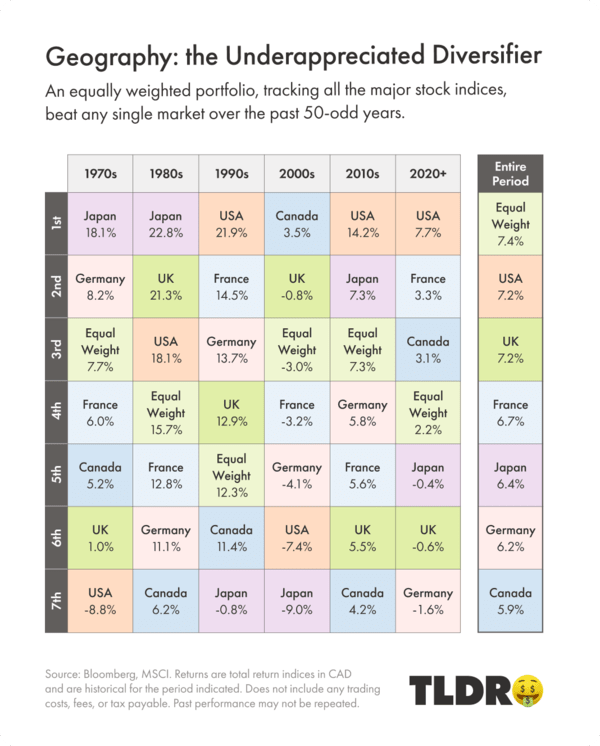
By following geographic diversification strategies for real estate investors in 2026, you protect against regional property tax hikes and fluctuating job markets. This approach creates a stable foundation, allowing you to capture growth in high-demand "Sun Belt" areas while maintaining the safety of established "Gateway" cities.
The Defensive Symphony: Legal Protection and Tax Efficiency
Think of your wealth protection strategy real estate as a defensive symphony. Each instrument—legal structures, tax planning, and property management—must play in harmony to protect the principal. A key part of this is adopting the "Financial Quarterback" mentality, where your investment choices are screened for their ability to withstand legal and fiscal pressures.
Wealthy investors often use entities like LLCs or Limited Partnerships to hold their properties. This provides a layer of asset protection, ensuring that a liability issue at one property does not expose your entire net worth. Furthermore, staying proactive about depreciation benefits and cost segregation studies can significantly boost your after-tax risk-adjusted returns.
In 2026, the use of AI-driven property management and data analytics has also become standard. These tools allow investors to monitor cap rates in real-time and predict maintenance needs before they become costly capital expenditures. Efficiency in management translates directly into a higher net operating income, which in turn increases the valuation of the asset. When you combine these modern efficiencies with the timeless benefits of tangible property, the result is a robust shield against market volatility.
FAQ
What are the benefits of diversifying a real estate portfolio?
Real estate diversification reduces your exposure to any single market's economic downturn. By spreading investments across different property types—such as residential, industrial, and retail—and different locations, you ensure that poor performance in one sector is offset by stability or growth in another. This strategy lowers the overall standard deviation of your portfolio and provides more consistent income.
How do you achieve diversification in real estate?
Investors can achieve real estate diversification by varying three key factors: geography, asset class, and investment vehicle. This means owning property in different states, mixing residential multi-family units with commercial or industrial spaces, and combining direct ownership with indirect methods like REITs or crowdfunding platforms to capture different market segments.
How do REITs help in diversifying a portfolio?
REITs provide an easy way to add real estate diversification without the need for large amounts of capital or hands-on management. They allow you to invest in specialized sectors, such as cell towers, data centers, or hospitals, which are typically inaccessible to individual investors. Because they are publicly traded, they also add a layer of liquidity to an otherwise illiquid asset class.
Is geographic diversification important in real estate?
Yes, geographic diversification is vital because real estate markets are inherently local. While the national economy might be strong, a specific city could face a downturn due to the closing of a major factory or a change in local tax laws. Spreading investments across various regions ensures that your total wealth is not tied to the fortune of a single municipality.
Can you diversify real estate with a small amount of money?
Absolutely. Modern financial tools like REITs and fractional ownership platforms allow investors to start with relatively small sums. These vehicles pool money from many investors to purchase institutional-grade assets, providing the benefits of real estate diversification and exposure to high-value properties that would normally require millions of dollars in individual capital.