Quick Facts
- 2026 Market Outlook: Gold remains a crucial safe-haven asset as investors navigate US debt levels exceeding $36 trillion.
- Rebalancing Rule: Consider a mechanical portfolio rebalancing with physical gold assets if your position grows to exceed 15-20% of your total net worth.
- Tax Cap: Physical gold is classified as a collectible, meaning capital gains are taxed at a maximum rate of 28%.
- Heirloom Bonus: Strategic wealth preservation through holding gold for heirs provides a significant tax advantage known as a step-up in basis.
- Verification: Prior to any transaction, verify the purity of items by inspecting hallmarks and maker's marks to ensure you receive full melt value.
- Reporting: Federal regulations require dealers to report cash sales exceeding $10,000 using IRS Form 8300.
- Performance Benchmark: In 2024, the price of gold achieved a 27% return, notably outperforming the S&P 500 total return for the same period.
As gold prices test new resistance levels and historical highs, the decision to hold or sell becomes a critical pivot point for 2026 investment portfolios. Deciding between selling physical gold and holding depends on your liquidity needs and portfolio allocation. A mechanical rebalancing strategy suggests selling enough gold to return to your target allocation when prices rise significantly, locking in gains without exiting the market entirely. If you lack a pressing need for cash, gold serves as a historical hedge against inflation and currency devaluation during periods of geopolitical uncertainty or market volatility.

The Sell vs. Hold Framework: 2026 Market Signals
In the current economic landscape, navigating the choice of whether to divest or maintain your position requires a look beyond simple price action. Wealth preservation is rarely about timing the exact peak; it is about managing risk. While gold is a premier safe-haven asset, its role in a portfolio changes as market conditions shift. For instance, should treasury yields rise significantly above 2% on a real basis, the opportunity cost of holding non-yielding gold increases, often serving as a signal to trim positions.
Conversely, the argument for holding remains anchored in systemic debt and currency debasement. When global annual gold demand reached an all-time record of 4,974 tonnes in 2024, driven largely by central banks, it signaled a long-term institutional shift toward gold away from sovereign paper. If your investment objective is protecting against market volatility, maintaining a core position is often more beneficial than attempting to time a total exit.
The concept of scaling out is particularly useful here. Instead of an all-or-nothing approach, many investors utilize a mechanical rebalancing strategy. If gold was intended to be 10% of your portfolio but through price appreciation now represents 18%, selling a portion allows you to capture profit while keeping your defensive shield intact.
| Signal Type | Market Condition | Strategic Action |
|---|---|---|
| Sell / Trim | Real interest rates rising significantly; Portfolio allocation exceeds 20% | Mechanical rebalancing to secure gains |
| Hold / Buy | $36T+ US debt expansion; Persistent inflation; Geopolitical unrest | Maintain as an inflation hedge and wealth insurance |
| Liquidity | Immediate need for cash for high-yield opportunities or debt payoff | Scaling out of bullion or coins |
When deciding between selling physical gold or holding for heirs, long-term investors must weigh the immediate utility of cash against the legacy of a portable, private store of value. For many, the decision is less about the daily spot price and more about where they believe the dollar will sit five to ten years from now.
Valuation of Gold Heirlooms and Jewelry
There is a significant tactical difference between selling a standard 1-ounce bar and selling a family heirloom. To maximize your return, you must understand the distinction between melt value and numismatic value. Standard bullion generally trades very close to the spot price, but jewelry and vintage coins carry variables like craftsmanship, historical provenance, and antique appeal.
Before selling inherited gold jewelry or heirlooms, verify the purity by checking for specific hallmarks and maker's marks. These stamps identify the metal's origin, date, and fineness. For example, you might see 750 (18k), 585 (14k), or a small animal symbol indicating a specific European assay office. Identifying hallmarks on inherited gold jewelry for valuation is the most efficient way to prevent a dealer from underpaying for a high-purity piece.
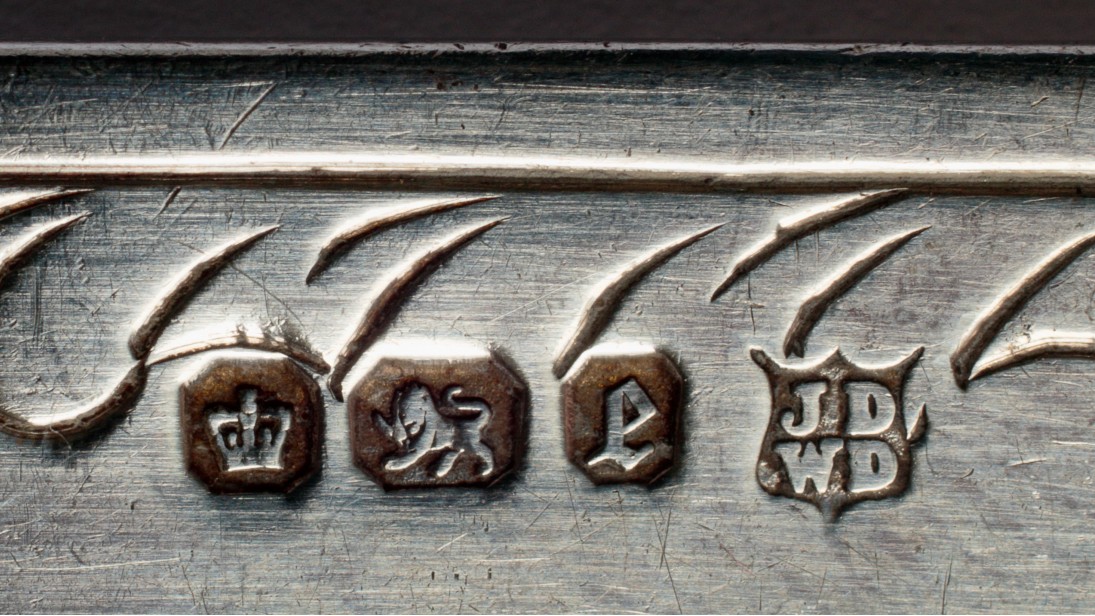
Determining purity of gold items before selling acts as your primary defense against predatory pricing. Use a magnifying loupe to check the clasps of necklaces, the inner bands of rings, and the edges of medals. If a piece appears handmade or features rare stones, it may possess a numismatic value that far exceeds the gold weight alone.
- Hallmark Check: Look for numerical codes (e.g., 916 for 22k) or pictorial marks.
- Weight Measurement: Use a digital scale calibrated to grams or troy ounces (one troy ounce is 31.1 grams).
- Magnet Test: Real gold is not magnetic. If the piece sticks to a strong magnet, it is likely gold-plated steel or another base metal.
- Professional Appraisal: Always seek a second opinion for unique antique items before visiting a refinery.
Investors often ask how to sell inherited silver and gold collections when the items are mixed. The process remains the same: segregate your bullion (coins and bars) from your decorative items. Sterling silver will often be marked 925, while gold pieces require separate testing due to varying karats. Valuation of gold heirlooms often involves more emotional weight than financial weight, so starting with a clinical assessment of purity ensures a clear-headed decision.

Tax Implications and Benefits in 2026
One of the most overlooked aspects of portfolio management is the tax drag associated with selling physical gold. The IRS classifies gold as a collectible rather than a standard financial security. This means that if you have held the metal for more than one year, you are subject to a maximum capital gains tax rate of 28%. This is significantly higher than the 15% or 20% long-term capital gains rates applied to stocks or ETFs.
When calculating capital gains tax on physical gold sales 2026, you must subtract your cost basis from the final sale price. Your cost basis isn't just the purchase price; it also includes any commissions paid, appraisal fees, and even shipping or insurance costs related to the acquisition. Keeping meticulous records is the only way to minimize your tax liability legally.
However, if your goal is wealth preservation across generations, there is a compelling reason to hold. Passing gold down to heirs allows for a step-up in cost basis. When an heir inherits gold, the asset's value is "reset" to the fair market price at the date of the original owner's death. If the heir sells the gold immediately, they likely owe zero capital gains tax because their "cost" is the current market price. This strategy can save families thousands of dollars compared to the original owner selling the gold and gifting the cash.

Key Takeaway: The 28% collectibles tax makes physical gold a "tax-heavy" asset to sell while alive but a "tax-efficient" asset to pass down as an inheritance.
Consider the tax benefits of holding gold as part of your broader estate planning. While the 2024 annual average price of $2,386 per ounce tempted many to sell, the long-term benefit of the basis step-up often outweighs the immediate gain.
Execution: Finding Reputable Gold Dealers
Once you have decided that selling physical gold is the right move for your liquidity needs, the final hurdle is execution. The gold market is unfortunately populated with "fly-by-night" operations that offer significantly below spot price. Finding reputable gold dealers requires due diligence. Look for businesses with at least 15 years of operational history and high ratings from the Better Business Bureau (BBB).
When dealing with high-value collections, many reputable buyers offer insured shipping for items valued up to a certain threshold—often the $199 insured shipping rule for medium-sized parcels, though high-end bullion dealers provide much higher limits. Always get a quote based on the current spot price minus a small percentage (the "spread" or "premium"). A dealer offering 90-95% of the melt value for jewelry or 98-99% for bullion is standard; anything significantly lower should be a red flag.
Be aware of reporting requirements. If you walk into a shop and sell your gold for more than $10,000 in cash, the dealer is legally obligated to file IRS Form 8300. This is not a tax on the gold itself, but rather a federal anti-money laundering requirement. Most professional investors prefer to receive payment via wire transfer or check to maintain a clean paper trail for their own records.
FAQ
Is it a good time to sell physical gold right now?
Whether it is a good time to sell depends on your original investment thesis. If your gold allocation has grown to represent a disproportionate slice of your portfolio due to recent record highs, it may be a prudent time for mechanical rebalancing to lock in profits. However, if you are holding gold as a long-term hedge against systemic debt and inflation, maintaining your position may be wiser given the current global economic climate.
Do you have to pay taxes when you sell physical gold?
Yes, if you sell your gold for a profit, the IRS treats it as a capital gain on a collectible. For gold held longer than one year, the maximum tax rate is 28%. If held for less than a year, it is taxed as ordinary income at your marginal tax bracket. Proper documentation of your original purchase price and related costs is essential for calculating your capital gains tax accurately.
How is the value of physical gold calculated?
The value is typically determined by the current spot price per troy ounce multiplied by the purity and weight of the item. For example, 18k gold is 75% pure. To find the melt value, you would multiply the total weight of the item by 0.75 and then multiply that by the current gold spot price. Items with numismatic or historical value may command a premium above this base melt value.
Where is the best place to sell physical gold?
The best place to sell depends on what you have. For standard gold bars or sovereign coins (like American Eagles), reputable online bullion dealers or local coin shops usually offer the best prices. For jewelry and heirlooms, look for specialized estate buyers or gold refineries that provide transparent pricing based on weight and purity rather than pawn shops, which often offer much lower rates.
What do I need to know before selling gold bars or coins?
Before selling, you should know the exact weight and purity of your items and the current market spot price. Understand that you will likely receive slightly less than the spot price to account for the dealer’s margin. Additionally, check for any reporting requirements; sales involving large amounts of cash or specific types of coins may trigger IRS reporting obligations like Form 8300 or Form 1099-B.
Strategy Summary
As we look toward the remainder of 2026, gold remains a cornerstone of a risk-aware investment strategy. Whether you choose the path of mechanical portfolio rebalancing with physical gold assets to capture recent gains or opt for the long-term tax benefits of holding gold for your heirs, the key is to act based on data rather than emotion. By verifying your assets’ purity, understanding the tax implications of collectibles, and working only with reputable dealers, you ensure that your gold continues to serve its primary purpose: the preservation of your hard-earned wealth.