Quick Facts
- The Opportunity Cost: A large tax refund represents an interest-free loan to the government. By optimizing tax withholding, you reclaim the time value of money and avoid the tax refund opportunity cost of stagnant cash.
- 2024 Average Refund: The Internal Revenue Service (IRS) issued approximately 117.6 million individual tax refunds, with an average amount of $3,050, representing a 4.8% increase from the previous year.
- Wealth Potential: Directing that average refund into a high-yield account instead of the IRS can generate over $1,500 in interest over three years at a 3.50% annual percentage yield.
- 2026 Growth Limits: Maximizing monthly take-home pay allows taxpayers to hit the 2026 HSA limit of $4,400 for individuals and the $7,500 IRA contribution limit.
- Market Growth: $3,000 invested annually starting at age 25 can grow to over $135,000 by retirement based on historical 10% market rates.
- Key Action: Perform W-4 withholding adjustments using the IRS withholding estimator at least twice a year or after major life events.
A large tax refund represents an interest-free loan to the government, creating an opportunity cost by preventing those funds from earning interest or growth elsewhere. Instead of waiting for an annual refund, taxpayers could have directed that money into high-yield savings accounts, CDs, or the stock market, where compounding interest could increase their overall net worth throughout the year. Achieving a neutral tax balance through proper tax withholding ensures your capital stays in your hands, working for your future rather than sitting idle in the federal treasury.
The Math of the Interest-Free Loan
To understand the hidden cost of your refund, we must look at the time value of money. When you overpay your federal income tax liability throughout the year, you are essentially providing the government with a 0% interest loan. In economic terms, this is a classic example of opportunity cost. Specifically, it is the difference between the Return on Most Profitable Investment Choice (RMPIC) and the Return on Investment Chosen (RICP). In this case, your chosen investment (the IRS) returns exactly 0%.
For the 2024 fiscal year, the Internal Revenue Service (IRS) issued approximately 117.6 million individual tax refunds, totaling more than 461.2 billion. This is capital that could have been used for debt reduction strategies or building liquid assets.
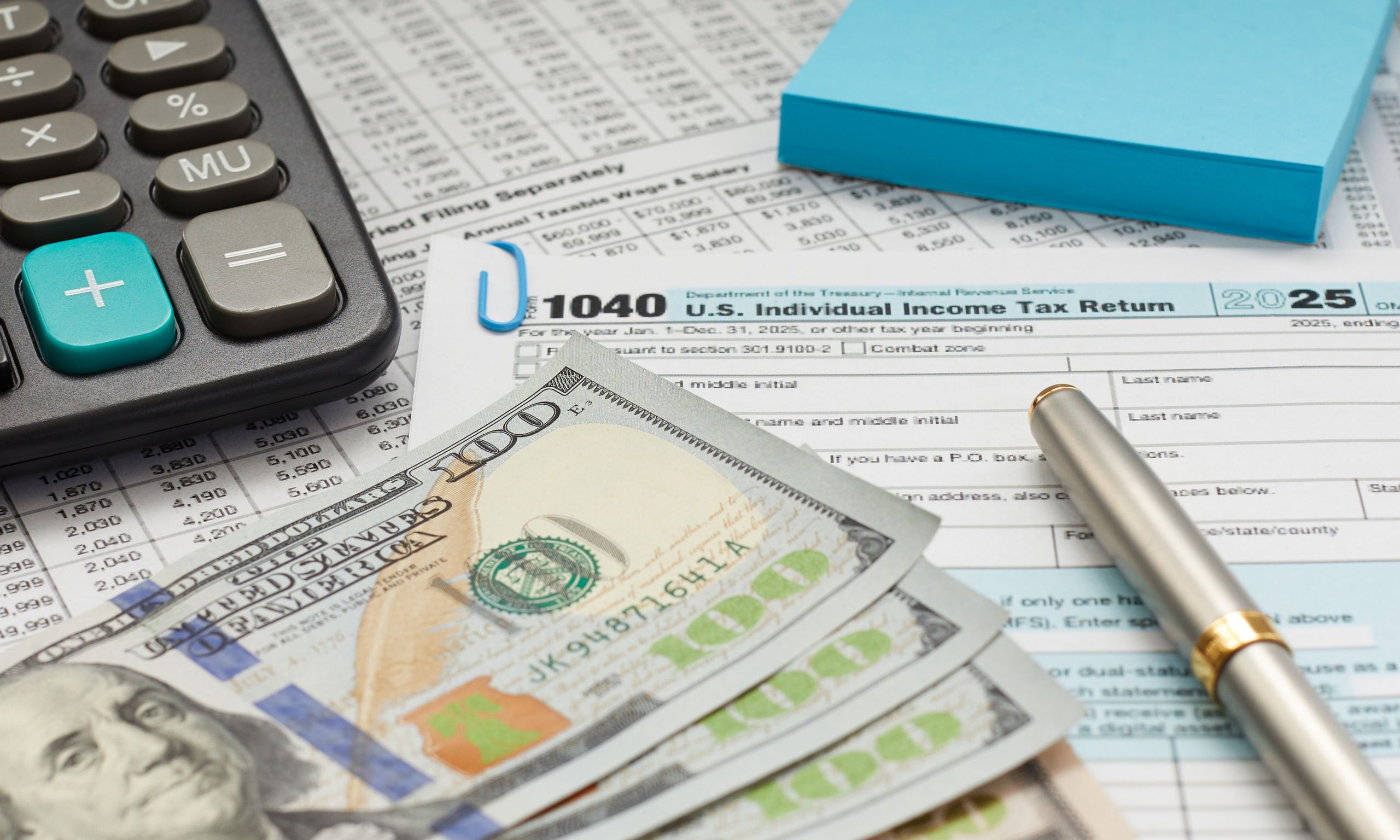
The financial impact becomes clearer when we compare a standard refund to a high-yield savings account (HYSA). According to recent data, the average individual tax refund for the 2024 filing season was $3,050, which was a 4.8% increase compared to the $2,910 recorded in 2023.
Consider the following table comparing $3,050 held by the IRS versus $254.16 monthly deposits into a 5.00% APY high-yield account:
| Month | Cumulative IRS "Loan" (0%) | HYSA Balance (5.00% APY) | Interest Earned |
|---|---|---|---|
| Month 3 | $762.48 | $768.83 | $6.35 |
| Month 6 | $1,524.96 | $1,550.84 | $25.88 |
| Month 9 | $2,287.44 | $2,346.33 | $58.89 |
| Month 12 | $3,050.00 | $3,155.12 | $105.12 |
While $105 might seem modest, the benefit of investing monthly tax savings vs annual refund compounds significantly over time. Financial analyses indicate that taxpayers could have generated over $1,500 in interest over three years by consistently investing an average refund at a 3.50% annual percentage yield. If that same money were placed in a fund tracking S&P 500 index returns, which have historically averaged 10% annually, the long-term gap would be even wider.
2026 Wealth-Building Thresholds: Where Your Cash Should Go Instead
Maximizing monthly take-home pay is the first step toward building a sustainable financial fortress. When you adjust your tax withholding to align with your actual tax liability, you increase your disposable income every single pay period. This shift allows for the implementation of automated bank transfers that fund your investment accounts on a schedule, rather than waiting for a single spring windfall.
The 2026 tax year introduces significant opportunities for those who control their cash flow. By reclaiming your monthly paycheck net pay from the IRS, you can prioritize these high-value vehicles:
- Health Savings Accounts (HSA): For 2026, the individual contribution limit rises to $4,400, while the family limit reaches $8,750. These accounts offer a triple-tax advantage that far outweighs the psychological "comfort" of a tax refund.
- Individual Retirement Accounts (IRA): The 2026 IRA limit for individuals under age 50 is $7,500. Consistent monthly contributions of $625 can fulfill this limit without the stress of a lump-sum payment at the end of the year.
- High-Interest Debt: If you are carrying credit card balances with interest rates north of 20%, every dollar sent to the IRS in overpayment is essentially costing you 20 cents in interest you could have avoided.

The difference between forced savings through tax refunds and automated bank transfers is one of control. When the IRS holds your money, it is inaccessible for an emergency fund or a sudden market opportunity. When that cash is in your own brokerage or savings account, it remains liquid and productive.
Psychology vs. Prosperity: Why We Love Refunds
As a tax editor, I often hear readers defend their large refunds as a "forced savings" mechanism. There is a psychological validation in receiving a financial windfall; it feels like a gift or a bonus. However, financial experts view this as a poverty cost. You are paying a premium—in the form of lost interest and inflation erosion—for the government to act as your disciplined piggy bank.
When considering the question "is it better to owe the IRS or get a refund?", the most financially savvy answer is neither. You should aim for a neutral tax balance. If you owe a small amount (within the underpayment safe harbor rules), you have successfully used the government's money for the year. If you receive a tiny refund, you have accurately estimated your obligations.
The danger of the refund mentality is that it often leads to impulsive spending. Data shows that large refunds are frequently used for lifestyle inflation rather than long-term security. Conversely, seeing your paycheck net pay increase month-over-month encourages more consistent, disciplined wealth-building habits through the time value of money.
Fixing Your Cash Flow: A Step-by-Step W-4 Adjustment Guide
If you received a refund of more than $500 last year, it is time for W-4 withholding adjustments. Updating your withholding is not a one-time event; it should be reviewed whenever you experience a change in filing status, income, or family size. Using the IRS withholding estimator is the most accurate way to determine your settings.
Follow these steps to recalibrate your payroll tax deductions:
- Gather Your Documents: Have your most recent pay stub and a copy of last year's tax return ready.
- Section 1 & 2: Confirm your filing status. If you have multiple jobs or a spouse who works, ensure you check the appropriate box in Step 2 to avoid underpayment.
- Section 3 (Dependents): For 2026, the child tax credit remains a powerful tool. Ensure you are claiming the correct number of qualifying children ($2,000 each) and other dependents ($500 each) to reduce the amount withheld from each check.
- Section 4 (Other Adjustments): This is where the magic happens. If you have significant itemized deductions (like mortgage interest) or if you plan to contribute heavily to a 401(k) or IRA, you can enter these amounts to further reduce your tax withholding.
- Submit to Payroll: Once you have calculated the new numbers, submit the updated W-4 to your employer immediately.
While the goal is to increase your take-home pay, you must remain mindful of the underpayment safe harbor. To avoid penalties, ensure your total tax withholding for the year equals at least 90% of your current year's tax or 100% of the tax shown on your return for the prior year (110% if your adjusted gross income is over $150,000).
FAQ
Is it better to have more or less withheld from my paycheck?
It is generally better to have the most accurate amount withheld. Having too much withheld means you are giving the government an interest-free loan and losing out on the time value of money. Having too little withheld could result in a large tax bill and potential underpayment penalties when you file. Aiming for a neutral balance maximizes your monthly cash flow while keeping you compliant.
What happens if I do not withhold enough taxes?
If your tax withholding does not cover at least 90% of your federal income tax liability, you may be subject to an underpayment penalty. The IRS calculates this penalty based on the amount of the underpayment and how long it remained unpaid. However, you can generally avoid this if you meet the safe harbor requirements by paying at least 100% of last year's tax liability.
Do I get my withheld taxes back in a refund?
You only receive a refund if your total tax withholding and refundable credits exceed your actual federal income tax liability. A refund is simply the IRS returning your own overpaid money. If your withholding is lower than your liability, you will not receive a refund and will instead owe the difference at the time of filing.
How can I change my tax withholding amount?
You can change your withholding at any time by submitting a new W-4 form to your employer's payroll department. Most modern companies provide an online portal for these W-4 withholding adjustments. It is highly recommended to use the IRS withholding estimator tool before making changes to ensure you are entering the correct figures for your specific financial situation.
What is the difference between tax withholding and tax liability?
Tax withholding is the money taken out of your paycheck throughout the year to pay toward your taxes. Tax liability is the actual total amount of tax you owe the government based on your annual income, deductions, and credits. If your withholding is higher than your liability, you get a refund. If it is lower, you owe money.