Quick Facts
- Market Impact: The Shanghai Composite Index recently dropped 0.7% as investors reacted to the failure of top leadership to sign a formal peace agreement regarding the Strait of Hormuz.
- Energy Vulnerability: Approximately 35% of China's total crude oil supply was sourced via this specific transit point in 2025, making it the highest dependence among major global economies.
- Inventory Deadline: Analysts are closely watching August 1st, a critical date when global oil inventories are expected to hit operational minimums if shipping disruptions persist.
- Sector Risk: Beyond oil, a staggering 85% of China’s helium is imported, with roughly half of that supply currently exposed to conflict zones in the Middle East.
- Resilience Buffer: Unlike regional peers, China maintains a buffer through a 58% reliance on coal and rapid EV adoption, though these cannot fully offset a prolonged maritime blockade.
- Strategic Stalemate: Despite a proposed 60-day extension to a tentative ceasefire, the lack of official signatures has kept the regional risk premium elevated for months.
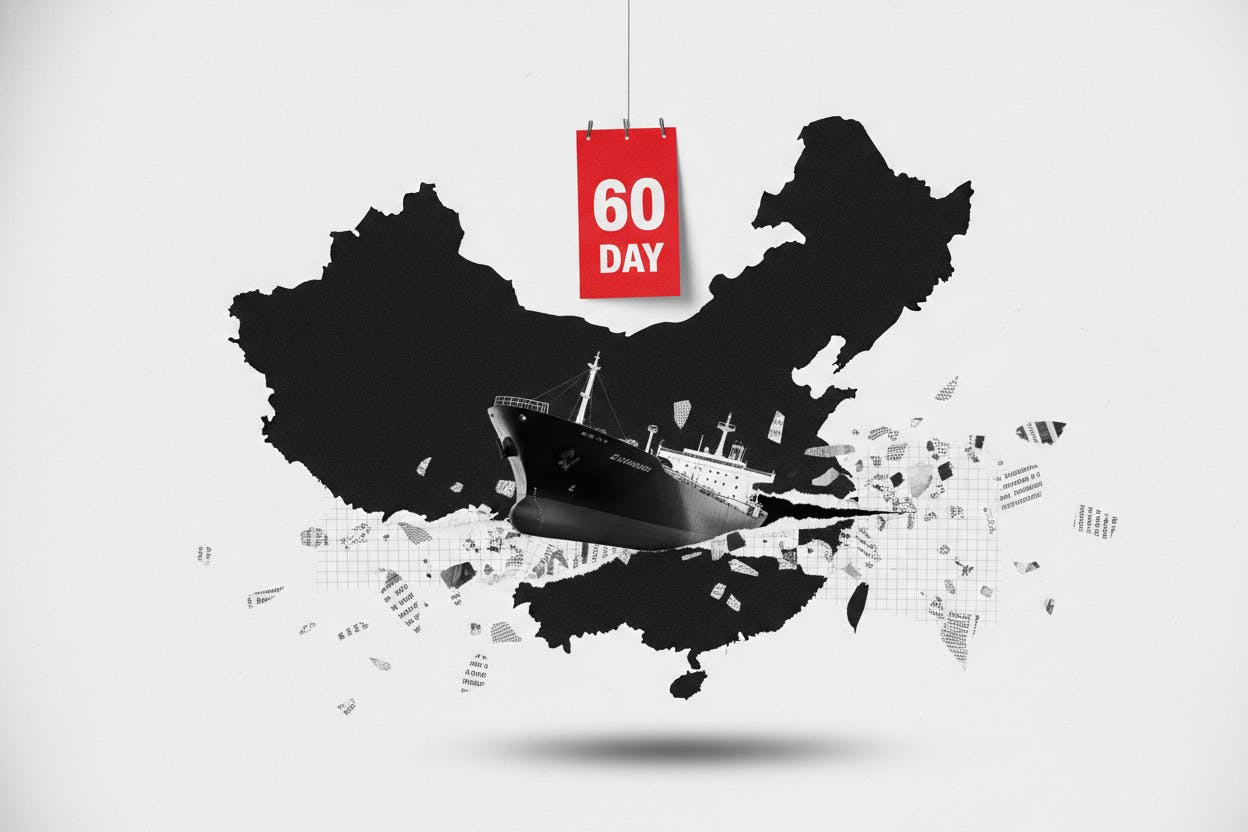
Recent strait of hormuz news suggests a tentative ceasefire, yet Chinese markets are reacting with skepticism. As of June 26, 2026, the failure to sign a formal peace deal has left the Shanghai Composite Index 'rattled,' as a persistent geopolitical risk premium weighs on energy-dependent stocks. Chinese stocks, including the Shanghai Composite, have recently declined because investors are pricing in a geopolitical risk premium due to an unsigned ceasefire in the Strait of Hormuz. Although a tentative 60-day extension was announced, the lack of a formal agreement following missile strikes has created market uncertainty. For China's manufacturing-heavy economy, this volatility signals higher potential costs for energy and transport.
Why the Unsigned Peace Deal is Crushing Stock Sentiment
In the world of portfolio strategy, we often discuss the concept of the Unsigned Deal Paradox. It is a state where diplomatic headlines promise peace, yet the absence of a formal, binding signature prevents markets from de-risking. This is exactly what we are seeing with strait of hormuz news today. When news broke that a 60-day ceasefire extension was on the table but remained unsigned by key Western and Middle Eastern leadership, it signaled to institutional investors that the threat of a sudden blockade was still very much alive.
The market reaction to this uncertainty has been sharp. On March 23, 2026, for example, the Shanghai Composite Index fell 3.6% and the Shenzhen Component dropped 3.8% following warnings that the shipping lane could face a total closure. Even in moments of relative calm, such as the final week of May 2026, the Shanghai Composite Index declined by 0.7% simply because the formal peace deal stayed unsigned. For those of us managing portfolios, this represents a persistent strait of hormuz risk premium shipping costs issue that eats into corporate margins.
We observe a phenomenon I call Weak Good-News Beta. Ordinarily, when a Chinese tech giant reports stellar quarterly earnings, the stock price moves upward in tandem. However, during this diplomatic stalemate, even positive corporate filings are being ignored by the market. The geopolitical risk premium is so heavy that it anchors the entire index, making any fundamental progress secondary to the latest iran news or diplomatic leaks. This makes investing in chinese stocks during hormuz conflict an exercise in patience and risk hedging rather than traditional growth hunting.
Sector Sensitivities: From Oil to Semiconductors
When the Strait of Hormuz is threatened, most investors immediately think of the price at the pump. While oil is the primary driver, the impact of strait of hormuz closure on chinese stocks is far more nuanced. We are watching the manufacturing overhead increases across the board. When maritime insurance rates spike, every exported container from Ningbo or Shanghai becomes more expensive to ship, even if it isn't heading through the Gulf.
However, the most critical niche commodity at risk today is helium. China imports 85% of its helium, and roughly half of that supply chain flows directly through the zones affected by the current conflict. Helium is essential for the cooling of magnets in MRIs and, more importantly for the modern market, the manufacturing of semiconductors and the maintenance of AI data centers. A prolonged disruption in the Strait would not just hit the energy sector; it would create a bottleneck for the entire technology and AI infrastructure ecosystem.
The following table illustrates how different sectors are currently responding to the threat of logistics disruption:
| Sector | Vulnerability Level | Primary Risk Driver | Impact on Margins |
|---|---|---|---|
| Heavy Manufacturing | High | Energy costs and shipping insurance | Severe contraction due to overhead |
| Technology/Semiconductors | Medium-High | Helium shortages and component logistics | Delayed R&D and supply chain lags |
| Consumer Discretionary | Medium | Increased transport costs for goods | Moderate, passed to consumers |
| Energy (State-Owned) | High | Physical supply disruption | High volatility; price spikes |
| Renewables (EV/Solar) | Low-Medium | Rare earth export logistics | Relatively resilient due to local sourcing |
This data shows that how strait of hormuz oil prices affect shanghai composite is only one part of a larger geoeconomic implication. We also have to consider the $221 billion exposure that Chinese companies have to the Gulf Monarchies. If the diplomatic stalemate continues, the cost of doing business in these strategic sea lanes will likely force a re-evaluation of long-term capital allocation in the region.
The Inventory Wall: Navigating the August Deadline
One of the most concerning aspects of the current strait of hormuz ceasefire news for investors is the timeline. We are currently approaching what we call the Inventory Wall. While global markets have been able to absorb the lack of a signed peace deal using existing stockpiles, those reserves have a shelf life. August 1st marks the point where global oil inventories are projected to reach an operational minimum.
If a formal agreement is not signed before this August 1st deadline, Iran gains significant leverage. A country with its back against an inventory wall is less likely to negotiate and more likely to exercise its ability to disrupt strategic sea lanes. For investors, this means the summer months will likely see increased volatility. We are advising our clients that the window for a diplomatic resolution to de-escalate the market is closing.
This ticking clock means that headlines regarding minor troop movements or verbal promises are less relevant than physical inventory levels. If you are watching china news for signs of a market rally, look for the signature on the peace deal, not just the handshake. Until that document is finalized, the straits remain a flashpoint that could trigger a sustained oil shock, further pressuring international equity benchmarks and domestic Chinese growth.
Resilience Check: China vs. Regional Peers
Despite the grim headlines, it is important to maintain a balanced view of China's structural resilience compared to its neighbors. When analyzing energy security, we must look at the energy mix. China’s 58% reliance on coal provides a significant survival buffer that Japan and South Korea do not have. Both Japan and Korea are almost entirely dependent on imported LNG and crude oil, much of which must transit the Strait of Hormuz.
In our internal analysis, we use a Resilience Scorecard to determine which markets can withstand a temporary closure of the Strait:
Resilience Scorecard (Geopolitical Disruption)
- China: Resilience Score 7/10. High coal usage, massive domestic EV penetration, and significant strategic oil reserves provide a buffer. However, manufacturing overhead remains a major weakness due to export dependency.
- Japan: Resilience Score 3/10. Extreme dependency on imported fuels and a lack of domestic energy alternatives make it highly vulnerable to a sustained blockade.
- South Korea: Resilience Score 4/10. Similar to Japan, though slightly higher domestic inventory levels provide a few extra weeks of stability.
This structural buffer suggests that while the Shanghai Composite Index is currently rattled, it is unlikely to face the same systemic collapse that a smaller, more import-dependent economy might suffer. However, the risk of a global supply chain breakdown remains a universal threat. For the long-term investor, the focus should be on companies that have diversified their logistics routes and those that are leading the transition toward energy autonomy.
FAQ
What is happening with the Strait of Hormuz right now?
The situation is currently characterized by a diplomatic stalemate where a proposed 60-day ceasefire extension remains unsigned by key international leadership. While shipping continues, maritime insurance rates remain elevated, and military tensions persist following earlier missile strikes, keeping global markets in a state of high alert.
Has Iran agreed to open the Strait of Hormuz?
Iran has not officially closed the Strait, but it has not provided the formal guarantees requested by the international community to ensure permanent safe passage. The failure to sign the latest peace deal means that the threat of a tactical closure remains a primary tool of political leverage for the region.
Can Iran legally block the Strait of Hormuz?
Under international law, specifically the United Nations Convention on the Law of the Sea (UNCLOS), the Strait is considered an international waterway where "transit passage" must be allowed. However, Iran is not a full party to all aspects of UNCLOS and argues that it has the right to control the waters within its territorial limits for national security reasons, leading to a long-standing legal and military dispute.
Can Strait of Hormuz be bypassed?
There are existing pipelines, such as the Abu Dhabi Crude Oil Pipeline and the East-West Pipeline in Saudi Arabia, that can bypass the Strait. However, these pipelines do not have the combined capacity to handle the full volume of global oil trade that currently passes through the waterway, meaning a total closure would still result in a massive global supply deficit.